
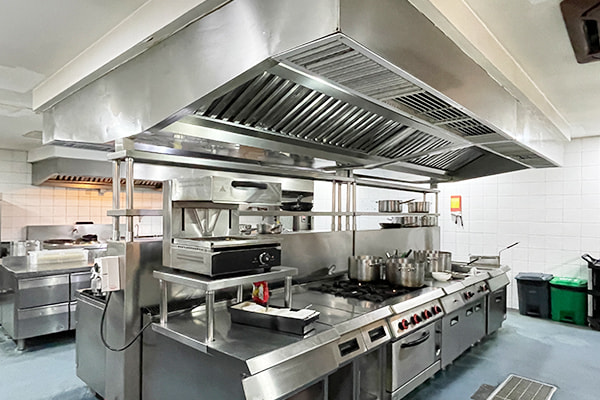
Commercial kitchen exhaust systems don’t fail overnight – They fail when cleaning processes break down.
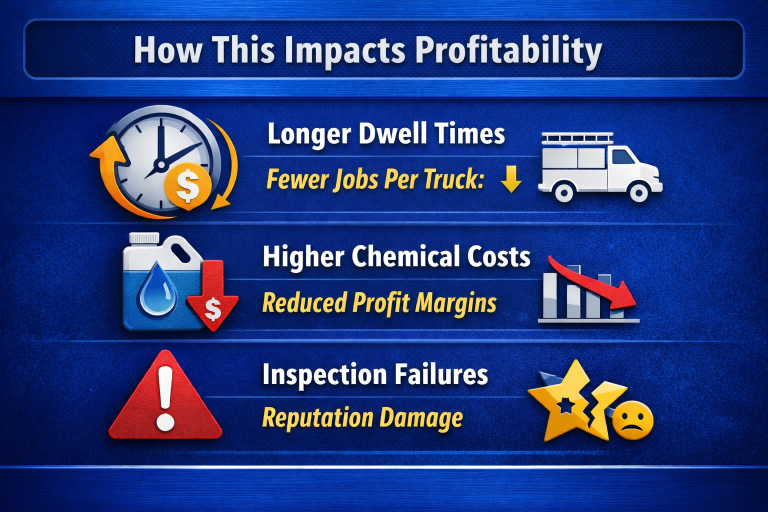
When grease doesn’t release properly, labor increases, callbacks rise, and inspection failures become more common. Many contractors assume the issue is pressure, manpower, or equipment.
In reality, the problem is often chemical performance.
If you’re a hood and duct cleaning contractor dealing with:
- Grease returning too quickly.
- Failed Inspections.
- Frustrated restaurant owners.
- Repeat service complaints.
The issue may not be labor. It may be the chemistry, dwell time, or process gaps.
Here’s what actually causes hood and duct cleaning to fail.
Problem #1 - Incomplete Degreasing
Common Issues:
Most cleaning failures happen because grease is loosened – but not fully broken down. Common causes are:
- Low-grade degreasers not designed for high-heat polymerized grease
- Insufficient dwell time
- Incorrect dilution ratios
- Cold-water application on hardened grease
Solution:
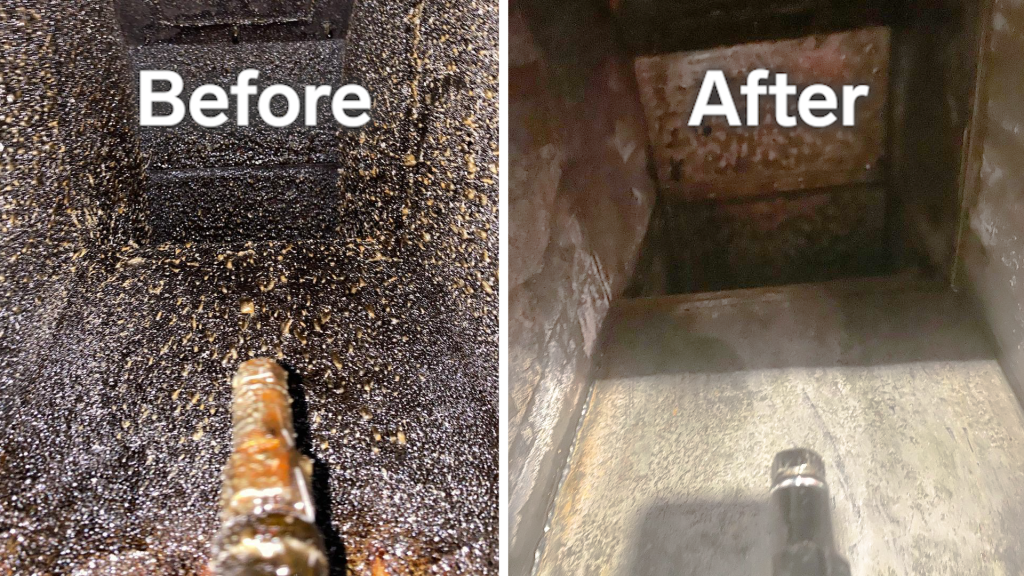
A properly engineered alkaline formula designed specifically for heavy grease environments breaks down fats at a molecular level — reducing reapplication and improving rinse efficiency.
Problem #2 - Incorrect Dilution Is Killing Your Margins
Many contractors either:
-
Over-dilute to stretch product
-
Over-concentrate thinking stronger equals better
Both approaches increase cost per job and reduce consistency.
The right chemical should perform at predictable dilution rates based on:
-
Grease load
-
Water temperature
-
Service frequency
When your supplier understands hood systems, dilution should not be guesswork.
Problem #3 - Hard Water is Reducing Your Cleaning Power
Common Issues:
In many regions, hard water neutralizes alkaline cleaners before they fully emulsify grease.
This leads to:
-
Increased chemical usage
-
Poor foam performance
-
Residual film left behind
-
Inconsistent cleaning results
Solution:
We get it- Some locations do not have water softeners. For this issue, you need show up ready with formulations that include built-in water conditioning agents to maintain performance even in high mineral environments.
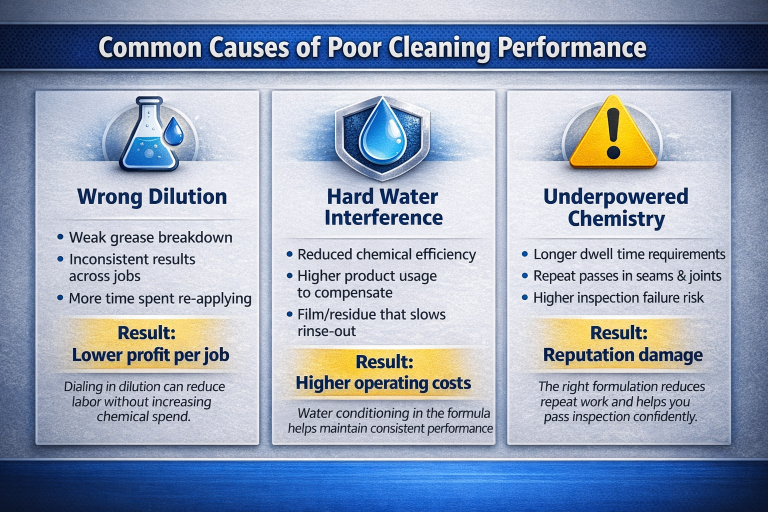
Problem #4 - Improper Chemical Selection
Not all degreasers are formulated for:
- High-temperature environments
- Heavy protein-based grease
- Long vertical duct runs
Using the wrong chemistry leads to:
- Surface cleaning only
- Incomplete breakdown
- Residual buildup
Problem #5 - Failure to Address the Full System
True NFPA 96 compliance requires cleaning:
- Hood interior
- Plenum
- Filters
- Horizontal duct
- Vertical duct
- Fan housing
Miss one area – and the system will contaminate itself again.
Why Repeat Grease Buildup Happens
Grease polymerizes under high heat.
Once hardened, it:
- Bonds to metal
- Resists low- alkaline cleaners
- Requires proper dwell and temperature to remove.
If not fully removed, it becomes a base layer for faster accumulation.
How Knight Enterprises helps contractors prevent failure
At Knight Enterprises, we work directly with hood and duct cleaning professionals to optimize performance in the field.
Our Top-performing hood cleaning customers focus on:
- Proper Chemical Formultion
- Correct dilution ratios
- Adequate dwell time
- High- temperature water
- Full system coverage
- Documentation for compliance
When the chemistry is correct, cleaning lasts longer- and clients stay longer.
At Knight Enterprises, We don’t believe in one-size-fits-all chemistry. We evaluate your:
- Cleaning process
- Water conditions
- grease load
- service frequency
Then recommend a solution tailored to your operation.
If your current chemical isn’t delivering consistent results, there may be a better approach.
Improve Your Hood & Duct Cleaning Efficiency
If you are experiencing:
-
Longer clean times
-
Excess chemical usage
-
Inconsistent inspection results
-
Repeat grease buildup
Knight Enterprises can evaluate your process and recommend the right solution for your environment.
*Your expertise is cleaning hood and ducts, our expertise is chemicals.*