
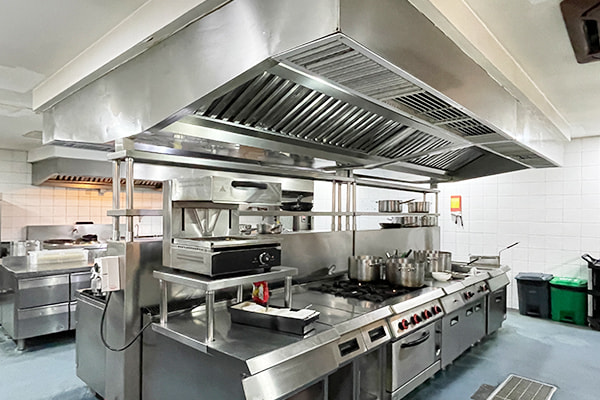
A Commercial Kitchen Cleaning Company faced significant inefficiencies with non-foaming degreasers and an expensive enzyme product for their restaurant hood and duct cleaning. We developed a custom, heavy-foaming alkaline degreaser that boosted cleaning efficiency by 20%, dramatically reducing labor time, and successfully replaced both their existing alkaline blend and a costly enzyme cleaner, optimizing their entire operation.
Problem
Solution
Impact
Existing alkaline degreaser wouldn’t foam, leading to poor grease penetration and runoff on vertical hood/duct surfaces.
Engineered a custom, high-density foaming alkaline degreaser.
Achieved robust, clinging foam with minimal equipment changes, maximizing dwell time on greasy surfaces.
Reliance on a separate, expensive enzyme product for specific, heavily soiled kitchen ventilation systems.
Formulated for enhanced strength and versatility, specifically targeting kitchen grease and carbonized residue.
Replaced both the original alkaline and the enzyme cleaner for improved efficiency, simplified inventory, and significant cost savings.
High labor costs and slow job completion due to product limitations when tackling tough kitchen grease.
Increased product efficacy and rapid degreasing power.
Reduced average commercial kitchen duct cleaning job time by 20%, boosting crew productivity and profitability for restaurant clients.
Crew dissatisfaction with current product performance and the effort required for stubborn kitchen grime.
User-friendly, highly effective solution tailored for restaurant environments.
Enthusiastic adoption by cleaning crews, improving morale and ensuring consistent, high-quality cleaning results for restaurants.
The Sticky Problem: Struggling with Restaurant Hood & Duct Grease
This Commercial Kitchen Cleaning Company, is a trusted name in maintaining safe and compliant restaurant ventilation systems, faced a persistent and costly challenge: their existing chemical products simply weren’t cutting it against the notorious buildup of kitchen grease, oils, and carbonized residues in commercial hoods and ducts.
Their cleaning arsenal included two main products: a standard alkaline blend intended to foam and an expensive enzyme-based product for particularly stubborn grease.
The core frustration? Their alkaline blend, crucial for breaking down heavy kitchen grime, consistently failed to produce an effective, clinging foam. This meant:
Poor Grease Penetration: The degreaser ran off vertical hood filters and duct walls too quickly, providing insufficient dwell time to dissolve baked-on grease and carbon.
Increased Labor for Kitchen Crews: Technicians had to apply more product, scrub harder, and spend excessive time on each system, driving up operational costs.
Inconsistent Cleanliness: Difficulty ensuring thorough removal of fire hazards and odorous residues, especially in hard-to-reach areas of the ventilation system.
Adding to this, the necessity of switching to a separate, costly enzyme cleaner for certain jobs further complicated their logistics and inflated material expenses without fully addressing the core efficiency issues. Airways came to us with a clear directive: “We need a degreaser that actually foams, is stronger against restaurant grease, and will significantly cut down on labor and job times for our kitchen clients.”
The Solution: Engineering a Custom "Grease-Eating" Foaming Degreaser
Understanding the unique demands of commercial kitchen environments – particularly the tenacious nature of restaurant grease – our chemical engineering team embarked on developing a specialized solution. We knew this wasn’t just about making foam; it was about creating a foam that works hard against the specific challenges of kitchen exhaust systems.
Our focus areas included:
Optimized Foaming & Adhesion: Developing a proprietary blend of surfactants designed to create a dense, stable, and incredibly clinging foam. This foam adheres to greasy vertical surfaces inside hoods and ducts, maximizing chemical contact time for superior degreasing.
Restaurant-Grade Alkaline Strength: Precisely calibrating the alkaline base with powerful degreasing agents to aggressively emulsify and break down heavy kitchen grease, oils, and even carbonized residues efficiently, without damaging the ventilation system materials.
Seamless Integration: Ensuring the new formulation was compatible with their existing foam application equipment, requiring minimal to no operational changes for their on-site crews. This was vital for swift and hassle-free adoption.
After rigorous formulation, testing in lab settings simulating commercial kitchen grease, and field trials, we delivered a custom foaming degreaser. This wasn’t just a new chemical; it was a targeted solution engineered to tackle the toughest restaurant cleaning challenges head-on.
The Impact: 20% Faster Kitchen Cleanings, Streamlined Operations, and Delighted Crews.
The implementation of our custom degreaser brought immediate and significant improvements to Airways’ commercial kitchen cleaning services:
1. 20% Reduction in Commercial Kitchen Cleaning Job Times
The superior, clinging foam allowed the powerful degreasing agents to dwell longer on heavily soiled surfaces. This meant faster breakdown of grease, less scrubbing, and fewer passes.
“Our crews reported an average 20% reduction in job completion times for restaurant hood and duct cleanings,” a representative of the company stated. “This directly translates to increased capacity, allowing us to serve more restaurant clients and improve our profitability.”
2. One Product Replaces Two: Simplifying Logistics and Saving Costs
The enhanced strength and superior foaming action meant our custom solution didn’t just replace their underperforming alkaline blend. Its robust capability against various kitchen residues also allowed it to effectively substitute their more expensive enzyme cleaner for many applications.
This dual-replacement led to a significantly streamlined chemical inventory, simplified purchasing, reduced storage space, and notable cost efficiencies for our restaurant cleaning operations.
3. Enthusiastic Field Crew Adoption & Improved Service Quality
Perhaps the most telling feedback came from the technicians themselves. They experienced the immediate benefits: easier application, visual confirmation of effective foam penetration, and the satisfaction of achieving a deeper, faster clean.
“Our guys absolutely loved it,” The company confirmed. “When the team on the ground is happy with a product, it speaks volumes about its effectiveness and ease of use, leading to better results for our restaurant clients.”
This positive reception ensured rapid and complete adoption of the new solution across the companies’ entire commercial kitchen cleaning fleet, boosting morale and ensuring consistent, high-quality service for restaurants.
Beyond the Foam: The Power of Custom Chemical Solutions in 2026
This case study vividly demonstrates that for specialized fields like commercial kitchen hood and duct cleaning, generic, off-the-shelf chemicals often fall short. In an industry where fire safety, hygiene, and efficiency are paramount, custom-formulated solutions offer a decisive competitive edge.
By partnering with chemical formulators who understand the unique challenges of restaurant grease and ventilation systems, you can achieve:
Targeted Performance: Chemicals precisely engineered to combat specific kitchen residues and optimize your existing equipment.
Operational Efficiency: Reducing labor hours and material costs, directly impacting your bottom line.
Enhanced Safety & Compliance: Ensuring thorough cleaning that meets health and fire safety regulations.
Competitive Advantage: Delivering superior results that differentiate your cleaning service in the demanding restaurant market.
Is your restaurant cleaning operation struggling with stubborn grease, slow job times, or ineffective chemicals?
Frequently Asked Questions (FAQ) about Custom Restaurant Duct Cleaning Chemicals
Q: What types of restaurant grease and residues can this custom solution tackle?
A: Our custom alkaline foaming degreaser is specifically formulated to break down a wide range of kitchen contaminants, including heavy cooking grease, oils, carbonized residues, and general particulate buildup commonly found in commercial kitchen hoods and ducts.
Q: Were significant equipment modifications needed for the case study company to use the new foaming degreaser?
A: A key objective in our development was to ensure the new formulation worked seamlessly with their existing foam application equipment. Minimal to no equipment modifications were required, allowing for a smooth and cost-effective transition.
Q: How does a 20% reduction in job time impact a restaurant cleaning business’s profitability?
A: A 20% reduction in job time can dramatically increase profitability by allowing crews to complete more jobs per day, reduce overtime pay, lower fuel consumption per job, and ultimately improve overall service capacity and revenue generation.
Q: Is this custom degreaser safe for all materials found in commercial kitchen ventilation systems?
A: Yes, material compatibility is a critical consideration in our formulation process. The custom degreaser is designed to be highly effective against grease while being safe for common materials found in commercial kitchen hoods, ducts, and exhaust fans, when used according to instructions.
Ready to transform your commercial kitchen cleaning operations with a chemical solution engineered for restaurant-grade grime? Contact us today for a consultation.